 Daniel Hiller
de4d768831
Daniel Hiller
de4d768831
Reported against 2.2.1 by someone reading the source. Every finding held.

**Sign-in had no ceiling.** Failures were logged with the caller's address
and nothing more. Two counters now — one per address, one per account —
because the two attacks look different: one source working through many
accounts is caught by the first, many sources working on one account by the
second, and behind a proxy only the second still means anything.

The count is kept in the process that serves the request. PLANKA needs no
Redis and the stock deployment is one container; run several and each keeps
its own count, which multiplies the ceiling by their number. That trade is
written where the limits are configured.

**The second factor could be guessed at leisure.** Six digits, and a
pending token that stayed valid for its full ten minutes however many codes
were wrong. Wrong codes are now counted on the session row — in the
database, so the count survives a restart and holds across every process —
and when the budget is spent the session is destroyed. After that even the
right code is refused and the login starts over from the password.

**Avatars, background images and favicons** checked the token's signature
and nothing else, so a revoked session, a deactivated account or a changed
password all kept working there for as long as the signature lasted, which
is a year by default. The five checks the API makes now live in one helper
that both use, rather than the shortened copy that had drifted from it.

**A link attachment's favicon** was fetched from wherever the URL pointed.
Storing a link is harmless — it is a string the user typed — but fetching
its icon is a request the server makes to an address the user chose, and
whether an icon came back reported on what is reachable from inside the
network. Server-side fetches now refuse private, loopback and link-local
addresses, `169.254.169.254` among them. The attachment is still created:
linking to an internal wiki is a legitimate thing to do, and it was the
server's own request that had to stop.

**The signing key.** Our own compose file ships `notsecretkey`, and it is
printed in the documentation — so on any instance that copied it, anyone can
sign a token for any account. PLANKA now says so on every start, and keeps
saying it, along with a key that is missing or shorter than 32 characters.
The placeholder carries the warning inline, where it is copied from.

**The backup script** wrote password hashes, live sessions, TOTP secrets and
SMTP credentials to an unencrypted archive. `BACKUP_PASSPHRASE` now encrypts
it, and without one the script says what it just put on disk. It also says
what it is — an example for the stock compose stack, not a backup concept —
and names the window between the database dump and the file copy, which no
ordering closes.





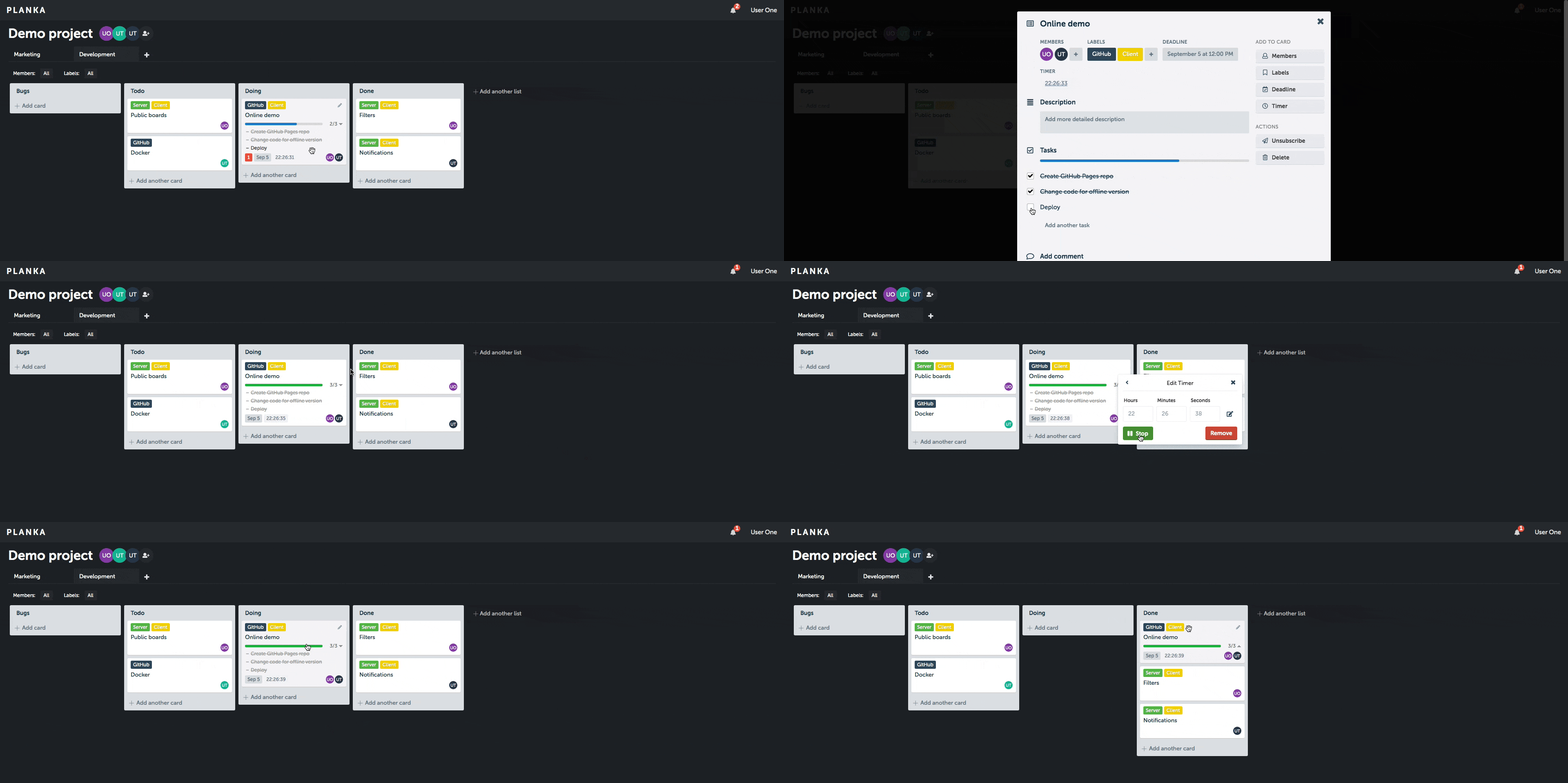
Key Features
- Collaborative Kanban Boards: Create projects, boards, lists, cards, and manage tasks with an intuitive drag-and-drop interface
- Real-Time Updates: Instant syncing across all users, no refresh needed
- Rich Markdown Support: Write beautifully formatted card descriptions with a powerful markdown editor
- Flexible Notifications: Get alerts through 100+ providers, fully customizable to your workflow
- Multilingual & Easy to Translate: Full internationalization support for a global audience
How to Deploy
PLANKA is easy to install using multiple methods - learn more in the installation guide.
For configuration and environment settings, see the configuration section.
Interested in a hosted or Pro version of PLANKA? Check out the pricing on our website.
Notes App
A testing version of the Notes app is now available on multiple platforms:
- iOS: Join the TestFlight to try the app
- Windows & Android: Download the app here
Contact
For any security issues, please do not create a public issue on GitHub - instead, report it privately by emailing security@planka.group.
Note: We do NOT offer any public support via email, please use GitHub.
Join our community: Get help, share ideas, or contribute on our Discord server.
License
PLANKA is fair-code distributed under the Fair Use License and PLANKA Pro/Enterprise License.
- Source Available: The source code is always visible
- Self-Hostable: Deploy and host it anywhere
- Extensible: Customize with your own functionality
- Enterprise Licenses: Available for additional features and support
For more details, check the License Guide.
Contributing
Found a bug or have a feature request? Check out our Contributing Guide to get started.
For setting up the project locally, see the development section.
Thanks to all our contributors!